
When I was at VCCA in October, I screened the A Life’s Work sample for my fellow residents. I introduce the sample as I always do, with a few caveats, including the big one: the ending is not the real ending. A couple of days after the screening, one of the residents and I spoke about the film, and one of the things he said was, “That is not your ending.”
It wasn’t that he forgot my caveat, it was that he knew my tacked on ending wasn’t even in the ballpark of a real ending. Which is something I knew when we put it together, but had, up until that conversation, forgotten. He’s right, it is SO not the ending.
All of this has me thinking about endings a lot lately. And it made me recall this post from April 2011 about endings. Hope you enjoy it.
DL: 12/18/12
Long before the first “Will you finish it in your lifetime” joke was hurled at me, before the first day of shooting, before the first meeting with Paolo Soleri, I recognized a dilemma: How do you end a film that doesn’t have an ending? There is no election/video game event/spelling bee/etc. with a clear winner and loser. No character in the film comes to a greater understanding of his or her past/present/future or his or her parents/children/secret family.
So, how will it end? Not sure. And though this question may seem particularly thorny in the case of A Life’s Work, I take comfort knowing even more traditional narratives have similar quandaries.
Take, for example, the classic 70s noir, Chinatown. Apparently, there was a dispute between Robert Towne (the writer ) and Roman Polanski (the director) over how to end the film. Here’s Jack Nicholson’s take on the Chinatown ending and the Chinatown almost-ending.
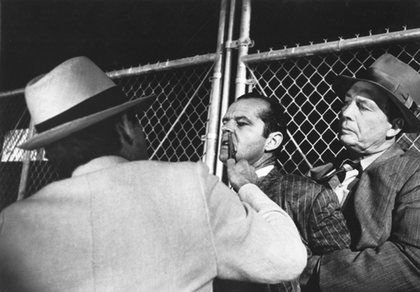
I believe I was out of town for most of the discussions. At the time though, I did think it was more daring to have a neat ending where the villain is punished. I’m glad Roman’s point of view prevailed, but that was more what was happening at the time. That was the “no happy endings period” at that time. At the time, Robert’s [happier ending] felt more unusual. But I’m glad Roman prevailed. As he says, “If you wrap everything up, the audience forgets it before they’re at dinner. If you leave them up in the air, you have a chance that they’ll talk about it for a few minutes.”
I know this much: I would like people to talk about A Life’s Work for a few minutes after seeing it.